When you’re specifying solid surfaces for a project, most of the conversation is around the material: which brand, which finish, how it performs and what it looks like in situ.
The fabricator producing it tends to get less attention – specifically, the standards they operate to and the accreditations that back those up. It’s not the most glamorous part of a specification decision but it’s often a more useful indicator of quality than a brochure.
We wanted to explain what accreditations actually mean in the industry, why they matter when you’re choosing a fabricator and why we’ve recently invested in extending our own.
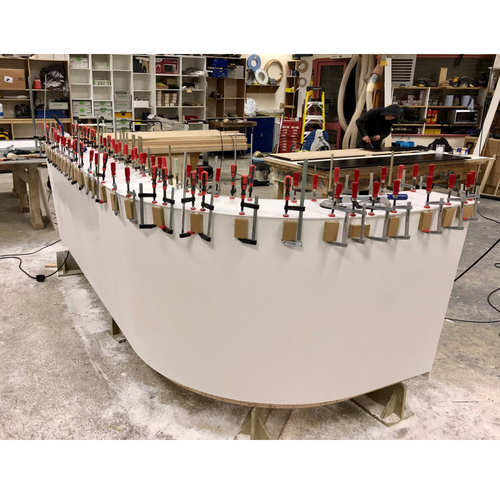
Why accreditations matter?
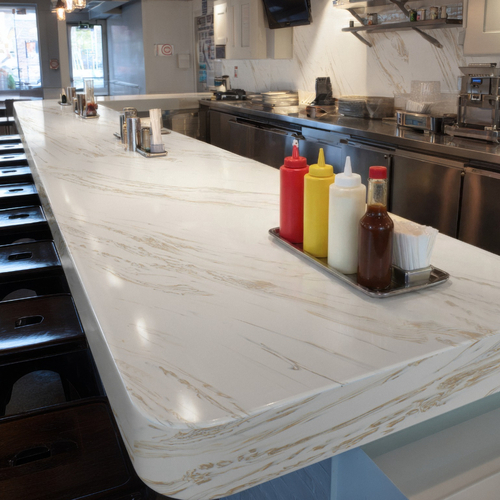
An accreditation is an external verification that a company meets a defined standard. A third party, like a manufacturer, a trade body or an industry party, has looked at how the business operates and confirmed it measures up. It’s not self-declared or permanent, so maintaining it means meeting those standards on every single project.
Accreditations broadly cover two things: fabrication quality and health and safety practices. The best fabricators have both.
Health and safety in fabrication
Producing solid surface worktops, wall panels, cladding or any other fabricated piece involves cutting, grinding and finishing materials. It’s skilled work and creates real occupational health considerations that businesses need to manage carefully.
The main risks in a fabrication environment:
Noise exposure: active fabrication workshops regularly exceed 85dB, the threshold at which the Noise at Work Regulations 2005 require hearing protection and health surveillance
Hand-arm vibration (HAVS): prolonged use of routers and grinders can cause nerve and circulation damage, requiring monitoring under the Vibration Regulations 2005
Skin sensitisers: certain resins and adhesives used in solid surface work can cause occupational skin conditions with repeated exposure
There’s another risk that’s received attention in recent years: respirable crystalline silica (RCS). Silica dust is generated when engineered quartz and natural stone are cut or ground, and it’s a serious respiratory hazard.
Acrylic solid surfaces don’t contain crystalline silica. That means the silica risk isn’t present during fabrication, for the team producing the piece or for contractors on site during installation. It’s a practical advantage of acrylic solid surfaces that doesn’t always come up in specification conversations.
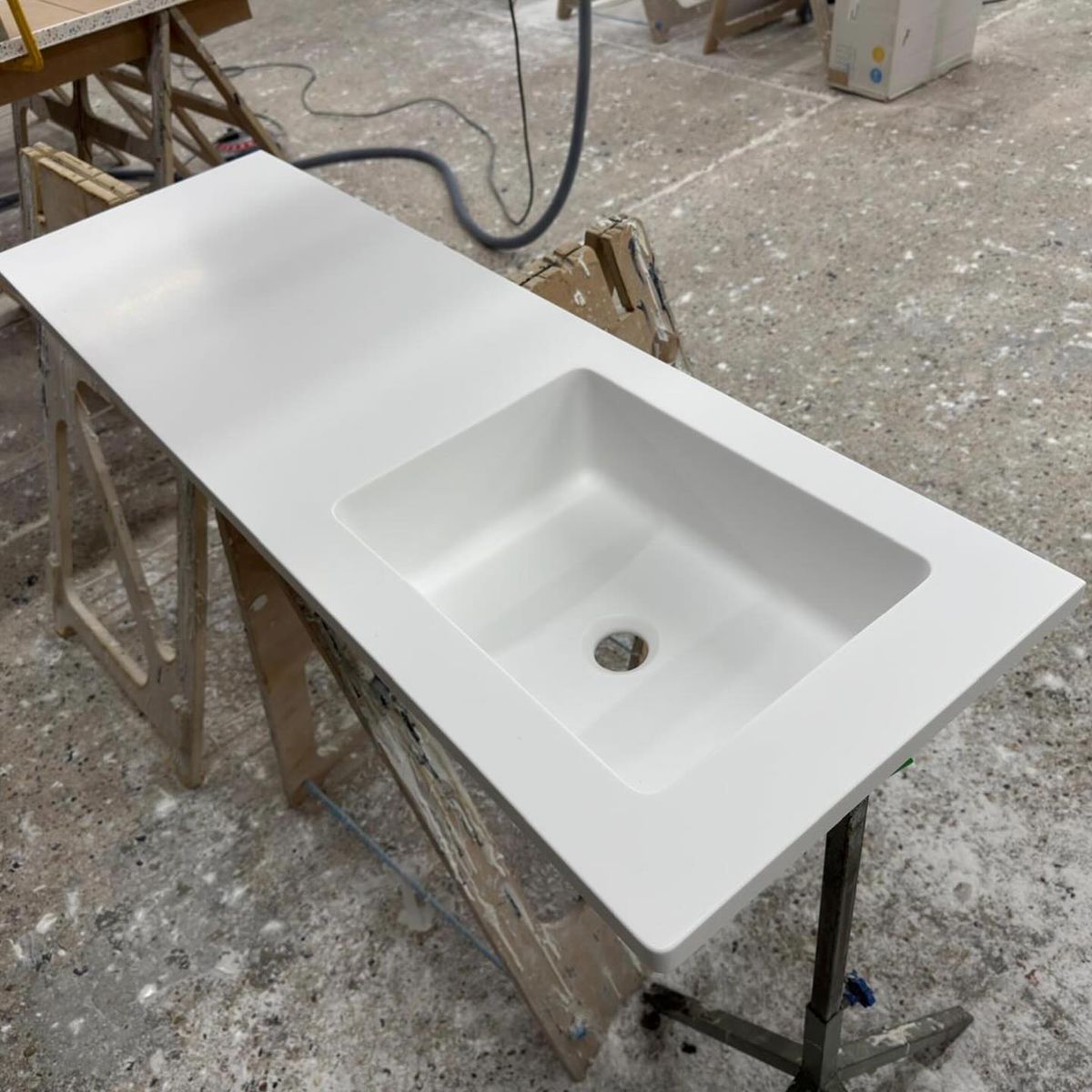
Alongside health and safety, the other area accreditations cover is how well a fabricator works with specific materials. Manufacturer accreditations are awarded by material brands to fabricators who meet their standards for handling, fabrication and installation. They’re brand-specific and require ongoing compliance.
Corian® Quality Network: We’re certified partners, meaning we follow Corian®‘s defined processes for fabrication and installation, assessed and confirmed by them directly.
HIMACS® Quality Club: We’re members of the HIMACS® Quality Club, confirming we meet their standards for how the material is worked and fitted on every project.
When a project specifies either of these materials, our certifications mean you know the work is being handled by a fabricator the manufacturer has assessed and approved.
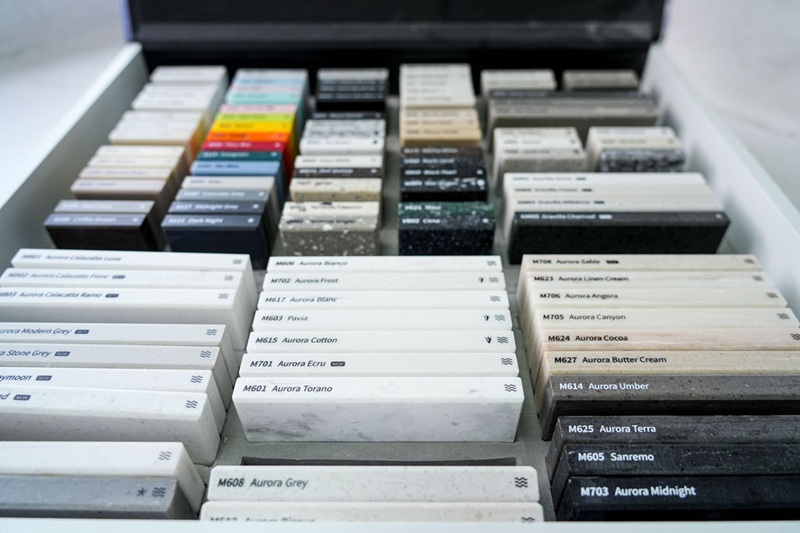
Onebest Furniture also holds Advanced accreditation with CHAS – the Contractors Health and Safety Assessment Scheme. CHAS Advanced is the highest level of CHAS certification, covering health and safety, financial standing, quality, environmental practice and professional standards. It’s assessed and audited annually by an external body.
For clients who require contractors to demonstrate compliance before appointing them (common on larger commercial and construction projects), CHAS Advanced provides independently verified assurance.
 What Can Be Made Using The Solid Surface Material
 Onebest Furniture-One of The Top Corian® Solid Surface Furniture Manufacturers in China
 Solid Surface Furniture Or Wooden Furniture? That is Not A Question
 Restaurant Hotel and Bar Worksurfaces-Why Choose Solid Surface Material

